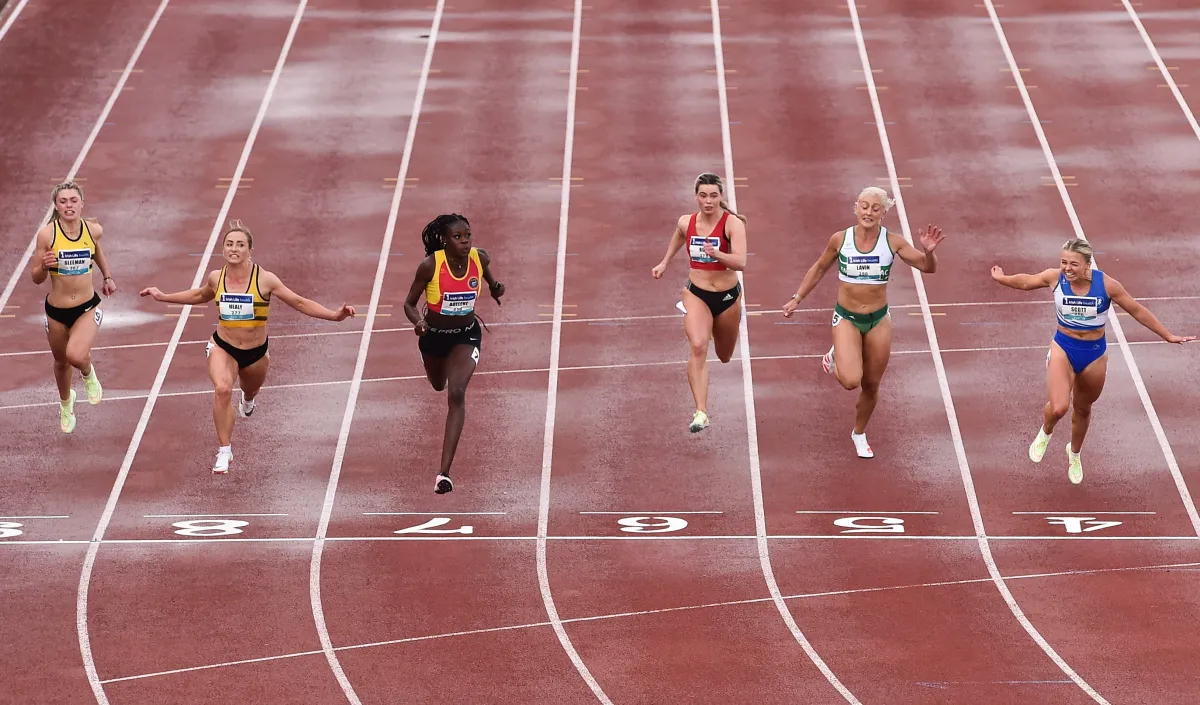
Sample Training Program

Your Training Programme

Your first priority is to get fit to train. This can be as simple as taking a half hour stroll at least three times a week.
Get used to being on your feet for that length of time, and then try to walk a bit faster.
If you can walk for 30 minutes and still feel ready for more, you’re ready to get started on the training schedule outlined here.
The two key elements to getting fit are:

  1. Following a structured programme
  2. Varying your training

A Sample Training Programme

Even if you feel completely unfit and haven’t done much more than walk to the shop for years, don’t worry. You can do it – it just takes a bit of will and organisation.
Don’t forget that getting fit is not just about training regularly – it’s also an attitude of mind. Every bit counts so why not leave the car at home, walk the children to school one morning a week, go for a swim, or pull that rusty old bike from the garage and use it.

Try to live your life as a good animal: get plenty of good food, drink lots of fluids, get a full nights sleep and use that body whenever you can
In the following schedule, start by walking fast and then in week three attempt to run and walk- in other words, run for maybe two minutes, then walk for two minutes until your 15 minutes are up.

Try then to run for longer stretches with shorter walking breaks until you can run for the entire 15 minutes. One trick to help you keep running is to aim for something: maybe a tree in the distance or a particular car or shop. Remember, it’s never as hard as it seems.

By now you should be able to run and walk for half an hour. If you keep running without stopping you are able to train seriously.

Week

Mon

Wed

Fri

Sun

Level

1

15

15

20

Walk

2

15

20

30

Walk

3

15

15

18

Run/Walk

4

15

18

15

10

Run/Walk

5

20

10

18

15

Run/Walk

6

25

15

20

30

Run/Walk

7

20

25

20

35

Run/Walk

8

25

15

20

30

Run/Walk

9

20

25

20

35

Run/Walk

10

20

30

30

35

Run/Walk

This may appear too gradual to some, but the idea is to give you a taste for running which will last a lifetime. Too much too soon and you will quickly become mentally as well as physically tired.
If at any stage you do fe
el tired, take a few days off or repeat a week. Make allowances for illness, family crisis, holidays, overtime or other extra stresses in your life. Flexibility in training is very important. If a late night has left you exhausted, don’t make matters worse by heading off an extra-long run. Take a walk instead or do nothing.

If at any stage you suffer from breathlessness, dizziness or pains in you chest, stop running and see your doctor immediately.

Training For A Race

By now, with a number of half-hour runs under your belt, you can be reasonably confident of finishing any 10K race. You will manage an extra mile or two on the day without too much bother. But why leave it to chance?

The six-week schedule (below) is based on covering twice the 10K (6.2 miles) distance in a week. In other words, it aims for a weekly mileage of 12 to 14 miles. Depending on your age and state of fitness, it should give you a 10K time of between 50 and 70 minutes

Week

Mon

Wed

Fri

Sun

1

2

4

3

3

2

2

4

2

4

3

2

3

2

5

4

2

4

2

5

5

2

6

2

4

6

2

2

2

6.2 (race)

Your aim in your first race is simply to finish. Don’t think about time; just enjoy the experience. Running a race over a shorter distance a few weeks earlier will help dispel start line nerves and get you used to the crowds and the atmosphere. If you’re aiming for the adidas/Evening Herald Mini Marathon, why not sign on for the series of build-up races organised by Meet & Train groups in the Dublin area.

Varying Your Training

Even if you’re not particularly ambitious about your running, varying your training is good for the body and the mind. It helps ward off staleness. For this reason, it is important to have a number of different routes for your regular runs. It is also a good idea to get away to somewhere entirely different at the weekends.

To add variety, why not try a few “speed sessions”. For instance, head for the local football pitches and start with a 10-minute jog and some stretches, and then run three sides of the pitch at a faster pace then usual. Jog or walk the fourth side and then set off again. Start off by doing this four times, gradually bringing it up to six times. Then cool down with another 10-minute jog. The beauty about this session is that it doesn’t take long. It would easily fit into a lunch break.

‘Lamp Post’ sessions
On the road, why not try a ‘lamp post’ session? After your 10-minute jog to warm up, speed up for the distance between two lamp posts. Then jog for a similar distance. Next time, try three lamp posts and after that four and then six, before coming back down the “pyramid”. This is a very adaptable session and as you get fitter, you can reduce your jog times or add more “lamp posts”.

Running up hills is another way of varying training and getting you really fit. Find a hill that’s not too steep. Run up the hill for 45 seconds. Note where you ended up, and after walking back to the start, repeat, trying to reach the same spot. This is a highly adaptable session: you can do your repetitions up steps or you can extend your time to a minute or even two minutes, depending on your fitness and steepness of the hill. But beware. This kind of hill training is not for novices.

Fartlek and Tempo Runs
A popular method of varying your training is called “fartlek”, the Swedish word for “speed play”. This is very simple to do: on your regular runs, just speed it up for a minute or so. Next time maybe sprint for 100m. After that try running hard for three minutes. If you run in a group, each member can lead for one of the fast bits.

A more formalised way of incorporating a fartlek session into your training is the pyramid: run hard for a minute, then try two minutes, and after that three, four and even five.

Try whatever suits you and your group. Tempo runs are also a good idea. On these, you warm up for a mile, then increase the pace for the next two, allowing yourself a cool-down mile at the end.

If you are a part of a large group, why not organise a handicap relay so that fast and slow runners can team up? Or have a straight handicap over, say, two miles?

Tips

The Four Golden Rules

  1. Start off low and progressively increase activity levels as you become fitter.
  2. Set yourself realistic targets. Don’t be afraid to revise these if you are finding the going tough.
  3. To encourage long-term participation, choose activities you enjoy and vary them. Exercise is meant to be fun.
  4. Larger built individuals should consider including low impact or non-weight bearing activities like swimming or cycling in their training programme.

- Lindie Naughton

Disclaimer
Before starting a training plan a full medical check-up is recommended. Athletics Ireland cannot accept responsibilities for any injury or damage suffered as a result of attempting any exercise regime on this website.

Road Races and Events

Rock N Roll Series Dublin
Fit City Series
European Team Championships 2013
Morton Games 2013
Grant Thornton Corporate Challenge

Please contact marketing@ athleticsireland.ie to advertise here AAI Logo

© 1996-2012 - Athletic Association of Ireland